Posts

LCC - Configuring a Push Button ~WITH~ Indication

Image
A few months ago there was a post on the LCC Groups.IO forum talking about the ability for one of the LCC node I/O points to both act as an INPUT, that is, to accept a push button command, AND act as an output, such as to illuminate an indicating light.  This is super cool!  Why?  Well at an all-in cost of around $3 per I/O point, it's hard to justify a lot of indicating lights on panels.  BUT... if we can get a "free" output for each discrete input, well, that is just like having your cake and eating it too!  (Never totally understood that analogy, but seems fitting.) The way this works is the node runs the I/O point as an output for 63 milliseconds, and then for a few milliseconds, it converts the output to an input where it polls the input.  So if it detects a "low" or a "high" in this window, it creates the appropriate event.  Slick, huh?  Timing at 63 ms is fast enough that even if the PB is just momentarily touched, it is enough to trigger...
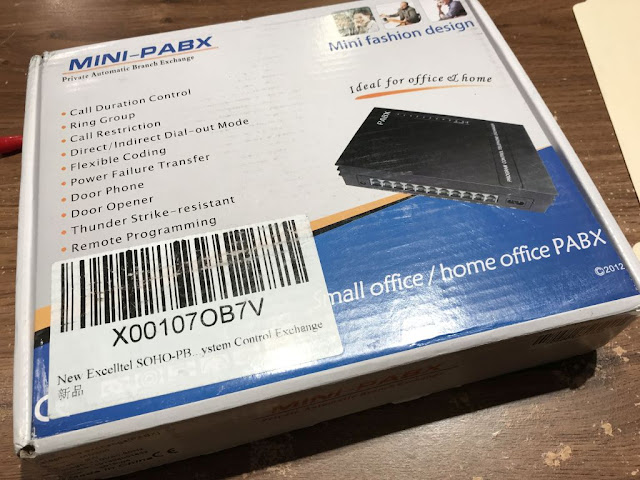
Communications - PABX

Image
The test op session surfaced the need to have some reliable means of communication between dispatch, the yard masters and the engineers.  In the past, FRS radios were used.  But crews did not like them as they were chatter-boxes, forcing everyone to listen to every conversation. Several of the layouts I had operated on had party line systems between locations.  They are great, and I was planning on developing one of those.  Then I came across a blog post ( https://rgsrr.blogspot.com/2019/05/layout-improvements-flooring-and-phones.html ) where a layout was equipped with a true private automatic branch exchange (PABX); that is, a truly independent phone system where people can call each other directly.  The price was very reasonable, and it would free me up from developing the circuits to do a party line.  Besides, I have a few old land-line phones laying around, so might as well put them back into good use. Arrived yesterday and cannot wait to get it ins...

Test Op Session SUCCESS!!!

Image
MAJOR milestone reached: The Great Northwestern Railway had the first "test" operating session!  The management decided the equipment had done enough trials, and the layout was ready for a real stress-test.  So an invite was sent out and 4 volunteers graciously accepted. Good news is the layout performed quite well.  There was a short punch-list of problems that were identified, but all in all, trains moved quite well and reliably. Next step is to flesh out the operating plan and set up waybills for the cars.  It's one thing to just pick up and drop off whatever you like; it is something entirely different to have specific destinations and car routing! Some highlights of the evening.  Thanks to all for making it a great success! Three of the four testers are, left to right, Dave Cochrun, Keith Hayes and Kevin Strong Gerry Glancy made up the balance of the test crew Multiple simultaneous movements in Armstrong yard was a key element of the tes...

Lighting and Fascia

Image
LIGHTING Progress has been slow but good on the GNW.  First, added lighting under the deck of the upper to light up the lower.  It was always kind of dark and murky under the upper deck, and it really needed something to brighten things up.  Four 15' strips of LEDs and a new power supply were added and it made a huge difference! Lighting was simply hot-glued under the upper deck.   Compression terminal blocks distributed the power.  Of note, I needed to add power feeds to BOTH ends of each string.  Voltage drop along each string was enough that the LEDs were noticeably dimmer on the far end without.   Here is the new power supply - an Ebay special.  I located it mid-point between the two pairs of LED strips. LED Power Supply Some before/after shots. Looking east before lighting Looking east after lighting. Looking west before lighting Looking west after lighting.  Quite the difference! ...

Configuring Push-buttons for Turnout Control in LCC (with BONUS section on Adapting JMRI for Feedback)

Image
So ALL the efforts, costs, brain damage and such to get LCC integrated into the layout is paying off in this one new step.  Let me explain. With LCC, each node is essentially its very own stand-alone microprocessor, capable of processing commands INDEPENDENTLY of a central PC or other server.  It just is connected to at the CAN bus, either looking for commands to respond (consumer) to or to issue them (producer).  SO... this addresses one of the goals of integrating LCC into my layout.  Sometimes I like to come down into the layout room and just run trains.  I don't have others with me, and for me, its a great way to unwind.  When I do that, I don't want to have to futz with turning on a PC and getting it going.  Ya, I know, some say it is not that big of a deal.  But if I am only going to be there for 5 or 15 minutes, seems like a hassle to mess with that.  I just want to through the power switch on, have the layout come to life, and run s...